Tree Roots in Your Sewer Line: Signs, Damage and What Actually Works
Your drains slow down, clear up, then slow down again. In Portland’s older neighbourhoods, that pattern usually has roots behind it — literally. This guide shows the seven signs, what roots do inside the pipe, and which fixes actually last.
Table of Contents
Every Portland street with mature trees hides the same underground contest. Tree roots hunt for water all summer long. Your sewer line offers water, nutrients and a warm path in winter.
Roots do not smash through healthy pipe like in cartoons. They slip through joints and hairline cracks that already exist. Once inside, they grow into a net that catches everything you flush.
This guide helps you read the early warnings. It also separates the fixes that last from the ones that rent you a few months. Portland’s clay and Orangeburg laterals make the topic local, not generic.
How Roots Get Inside a Sewer Line
A sewer lateral is not one sealed tube. It is sections joined every few feet, buried for decades. Each joint is a possible doorway for a thirsty root tip.
Clay pipe joints open as soil shifts and mortar ages. Orangeburg, the fibre pipe in many postwar Portland homes, softens and deforms. Roots enter those gaps, then thicken until they split them wider. PVC resists better, but a poorly glued joint still leaks vapour that roots follow.
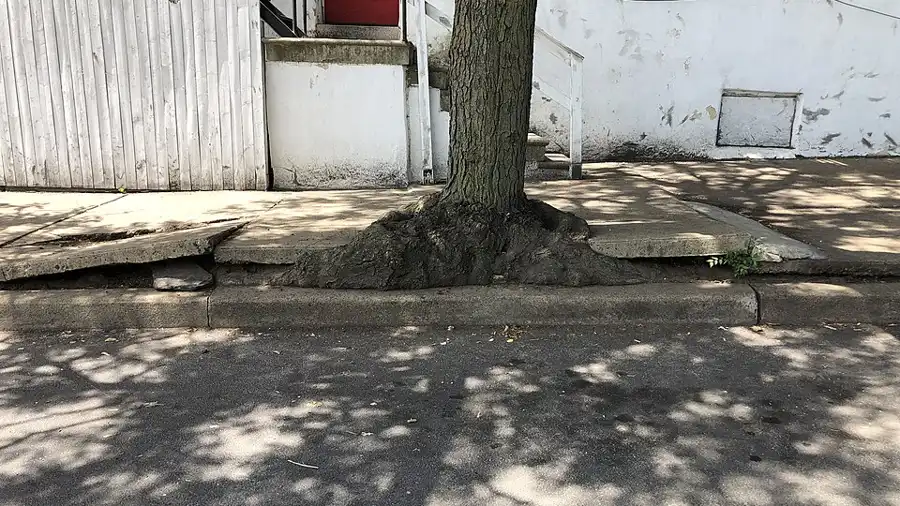
Portland’s street canopy leans heavily on maples and other thirsty species. Their roots spread well beyond the crown in dry soil. A tree in the parking strip can reach a lateral running houses away. Summer irrigation bans push those roots harder toward your line’s moisture.
Once inside, the root mass feeds on the flow itself. Paper and grease snag on it and build a living dam. That is why root clogs return faster each time they are cleared. And remember whose pipe it is: the lateral belongs to the homeowner, as our responsibility guide maps out.
7 Signs Tree Roots Are in Your Sewer Line
One sign can mislead. Three or more together point at roots with confidence:
The returning clog is the signature sign. A cleared root mass regrows from the stumps left behind. Each regrowth catches waste sooner than the last one did. If your line needs clearing twice a year, the pipe is telling you something.
A grease clog behaves differently from a root clog. Grease slows one fixture’s drain, usually the kitchen’s line alone. Roots slow the whole house, because the blockage sits in the main lateral. That whole-house pattern is the fastest home test you have.
How Serious Are Tree Roots in a Sewer Line?
It depends entirely on what the roots have done to the pipe. Fine roots woven through a joint are a maintenance problem. Thick roots that have cracked or offset a section are a structural one.
Left alone, the sequence is grimly predictable. Roots thicken, joints open wider, and soil washes into the line. Sections can belly, crack or collapse outright. A collapsed lateral means excavation, not another clearing visit.
Nobody can grade your line from the symptoms alone. A sewer camera inspection shows the root mass and the pipe around it. That footage decides whether you need clearing, treatment or replacement. Paying for any fix before seeing it is guessing with real money.
The end stage is a sewage backup into the lowest fixtures. That event brings cleanup costs and a genuine health hazard. It also tends to arrive during heavy use or heavy rain. Nobody budgets for it, which is why the camera grade matters early.
What Actually Removes Roots: Cutting, Foaming and Lining
| Method | What it does | How long it lasts |
|---|---|---|
| Mechanical cutting | A rotating blade trims roots back to the pipe wall | Months; roots regrow from the stumps |
| Hydro jetting | High-pressure water scours roots and buildup out | Months; same regrowth problem |
| Foaming root treatment | Herbicide foam kills roots inside the pipe after cutting | Slows regrowth for a year or more |
| Pipe lining | A new pipe wall forms inside the old, sealing joints | Years; needs a structurally sound host pipe |
| Section replacement | The failed stretch is dug up and replaced | Permanent for that section |
The pattern in that table is the whole lesson. Clearing methods manage roots; only sealing or replacing fixes the doorway. A camera grade tells you which row your line belongs in. Older Portland clay lines often need the last two rows eventually.
Cutting and jetting are often combined on the first visit. The blade opens the mass; the jet washes the debris downstream. Ask what the camera showed after the clearing, not before it. A post-clearing look is the only honest grade of the pipe.
What Does It Cost to Fix Tree Roots in a Sewer Line?
Start with the camera, at $150 to $300 in Portland. That visit prices everything after it, because the footage shows the damage. Clearing roots typically costs a few hundred dollars on top.
Replacement is where the real money sits. Sewer spot repairs in our cost guide run $300 to $2,500 by depth and access. A failed full lateral costs more again. This is why the footage matters before anyone quotes you.
Get the quote in the right order. Camera first, clearing second, repair only if the footage demands it. Any replacement quote given without footage is a guess wearing a uniform. Portland homeowners can also ask whether neighbours share the line, because party sewers split that conversation.
Keep Roots Out After Clearing
Know Your Line’s Path
Every prevention step starts with the map. Know where the lateral runs before you plant anything. Keep new trees well away from that corridor.
Treat on a Schedule
Foaming treatment after clearing slows the regrowth clock. Annual treatment suits lines with known root pressure. Your camera footage sets the right interval.
Watch the Drains Monthly
Slow drains are the earliest free warning you get. Note which drains slow and how often. A pattern of returns means the mass is rebuilding.
Choose Trees Like a Plumber
New planting near a lateral should stay small and slow. Deep-rooted thirsty species belong far from the line’s corridor. The cheapest root problem is the one never planted.
Re-Scope Before It’s Urgent
Old clay lines deserve a camera check every few years. Catching a crack early costs a lining. Catching a collapse costs an excavation.
Frequently Asked Questions
The root questions Portland homeowners ask us most.
How serious are tree roots in a sewer line?
Serious, because they never shrink on their own. A light root mass means slow drains and repeat clogs. A heavy mass can crack the pipe and collapse a section. A camera inspection shows which stage your line has reached.
How much does it cost to fix tree roots in a sewer line?
A camera inspection runs $150 to $300 in Portland. Clearing roots typically costs a few hundred dollars after that. If the pipe itself has failed, repair becomes the real cost. Our cost guide explains how those numbers build.
Does homeowners insurance cover tree roots in sewer lines?
Usually not for the roots themselves. Insurers treat root growth as gradual and preventable. Service line coverage, sold as an add-on, is the exception worth checking. Our insurance guide explains how that endorsement works.
What dissolves tree roots in sewer lines?
Foaming root treatments kill roots inside the pipe without excavation. Copper sulfate is the older method, with real cautions around trees and septic systems. Neither repairs a pipe the roots already cracked. Cutting plus a camera check is the reliable starting point.