
Thermal Imaging Leak Detection
Thermal Leak Detection in Portland, OR
See the temperature pattern. Confirm it before anyone opens a wall.
You suspect a hidden leak, but nothing shows a clear source. You want answers without tearing rooms apart on a guess. Thermal leak detection gives a first, non-invasive look. Used well, thermal imaging leak detection points to one suspect area. We then confirm that area before opening anything.
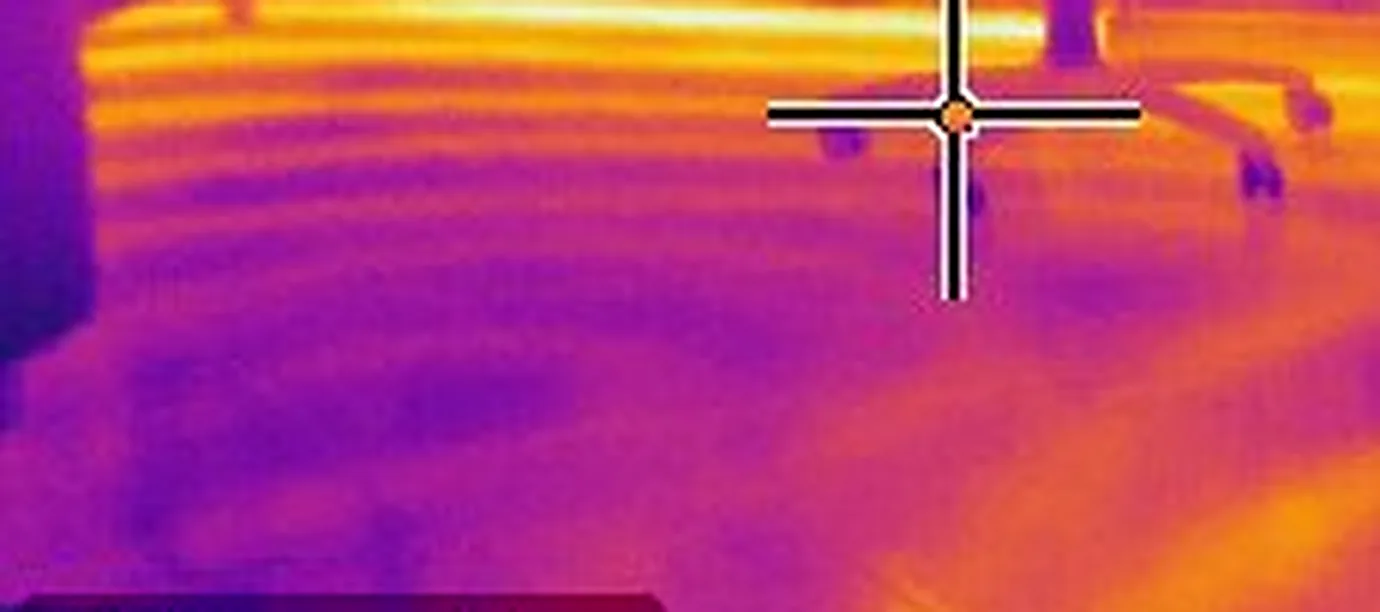
Non-invasive scan, no demolition to look
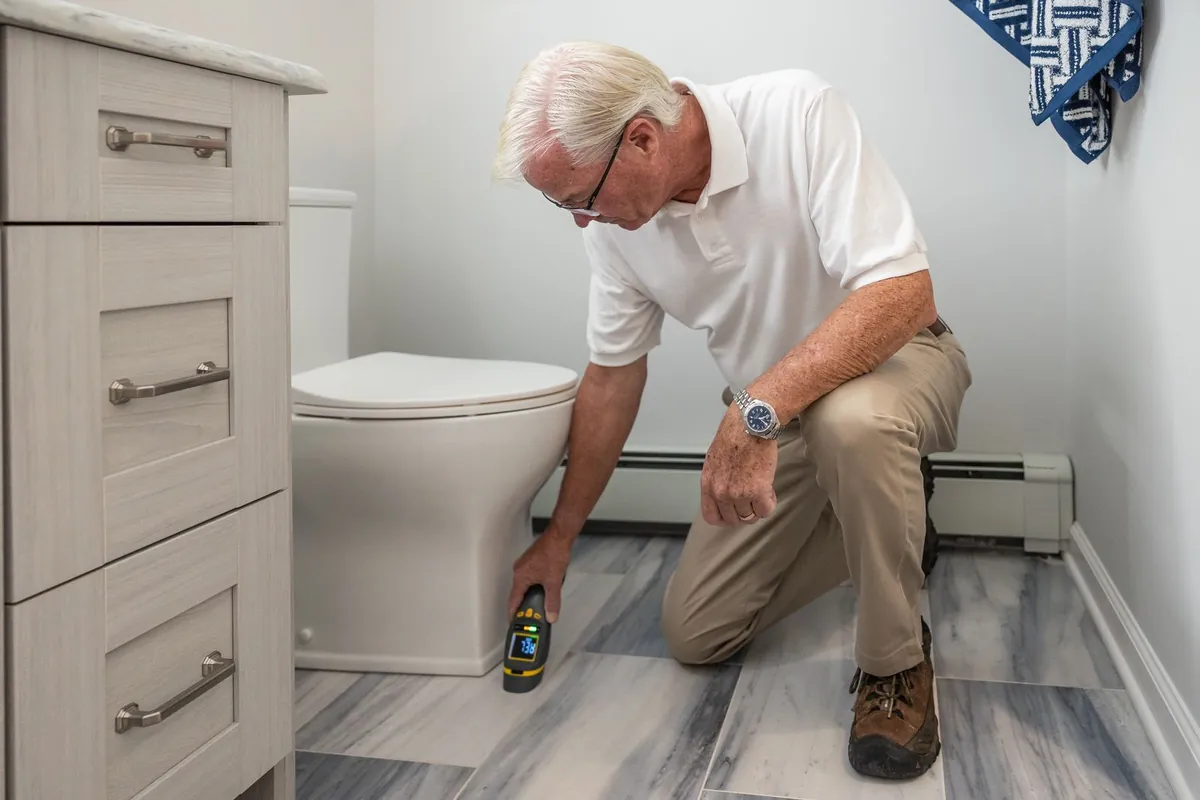
Suspect patches checked with a moisture meter
Honest limits explained before we start
One marked spot, not a vague area
What Thermal Leak Detection Shows on Walls, Floors and Ceilings
A thermal camera reads infrared energy from a surface.
It turns surface temperature into a colour image, called a thermogram.
Water changes how material holds and moves heat.
So a leak often leaves a temperature pattern behind it.
A hot water leak usually leaves a warm trail.
That trail often follows the hidden pipe path.
Damp material usually shows as a cooler pattern.
Manufacturers call this cooling effect evaporative cooling.
Water below a surface also holds heat differently.
It can stand out against dry material around it.
That pattern is a lead, not proof by itself.
This is how thermal imaging leak detection should work.
The scan narrows a room to one area.
Our other tools then test that exact area.
See our leak detection in Portland homepage for more.
Can a Thermal Camera See Through Walls? No — And Why That Matters
No. A thermal camera cannot see through walls. It also cannot see water itself. FLIR, a camera manufacturer, states this plainly. The camera reads only surface temperature. If something inside a wall changes that temperature, it shows. If nothing reaches the surface, nothing shows.
Some pages promise X-ray style vision. That is not how this technology works. Evaporating water can cool one patch below its neighbours. A hot pipe can warm one line across a floor. We read those surface clues, then verify them.
| Thermal imaging CAN | Thermal imaging CANNOT |
|---|---|
| Show a warm trail from a hot line | See water itself |
| Reveal a cool pattern from active damp | See through walls or floors |
| Map where moisture spreads across a surface | Find a leak with no temperature difference |
| Scan large areas without opening anything | Prove a leak alone, without other checks |
| Guide where to test next | Measure how much moisture is present |
Where Thermal Imaging Leak Detection Works Best in Portland Homes
Some leaks suit a thermal scan far better than others. Hot water, heating, and surface moisture give strong signals. Many Portland homes built decades ago hide ageing pipes. Irvington, Laurelhurst, and Sellwood hold many such homes. So do Ladd’s Addition, Buckman, and Kerns.
Hot water lines: the clearest thermal signature
Hot water creates strong contrast against cool surroundings. The warm trail follows the pipe under floors or inside walls. The warmest point often sits closest to the leak. This pattern helps us mark one small suspect area. Hot-line slab leaks are one strong thermal case. See our slab leak detection in Portland page.
Radiant floor heating leaks
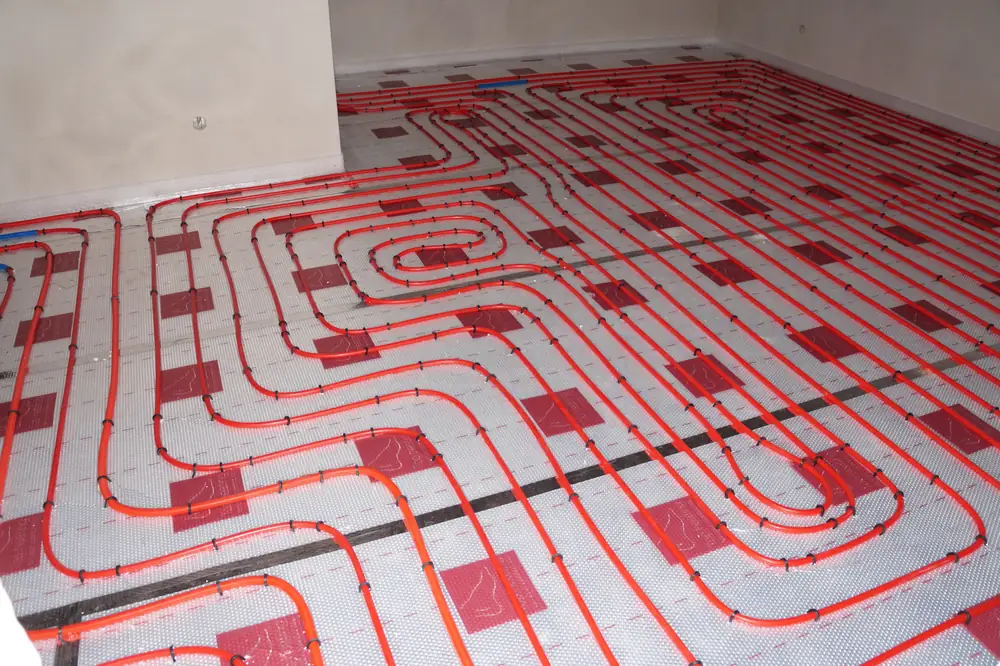
A heated floor should warm in an even loop pattern. One uneven warm patch breaks that normal pattern. We trace the loop, then compare the odd patch. That contrast tells us where to test next.
Wall and ceiling moisture patterns
Water rarely drips straight down from its source. It tracks along joists, pipes, and framing first. So a ceiling stain may sit far from the leak. The damp pattern often reveals that hidden path. A stain shows where water arrived, not where it escaped.
What a Thermal Scan Cannot Prove
A scan needs a temperature difference to show anything.
No contrast means no clear signal on screen.
Cold water leaks can hide in cold, damp ground.
Portland winter ground is already cold and wet.
The leak may match its surroundings almost exactly.
That limit shapes honest thermal leak detection work.
A camera also cannot measure how much moisture exists.
It cannot prove that damp is an active leak.
It cannot name the exact part that failed.
Thick insulation or heavy materials can hide patterns.
Unpressurised drain lines give weak signals too.
Cool patches that are not leaks
Not every cool patch means escaping water. Drafts can cool one corner of a room. Missing insulation can cool a whole wall section. Thermal bridging through framing creates cool stripes. Sun-warmed walls can make normal areas look wrong. Rain-cooled siding can mimic a damp pattern. Fluke, another manufacturer, warns about these false positives.
How We Confirm a Thermal Leak Detection Finding Before Opening Anything
A pattern earns trust only after other tools agree. We follow the same confirmation steps on every visit.
01 — SCAN
Scan the suspect rooms and mark the pattern.
02 — METER CHECK
Check the marked patch with a moisture meter.
03 — ACOUSTIC CHECK
Add an acoustic check on pressurised supply lines.
04 — COMPARE
Compare results and rule out innocent causes.
05 — MARK AND EXPLAIN
Mark one confirmed spot and explain the finding.
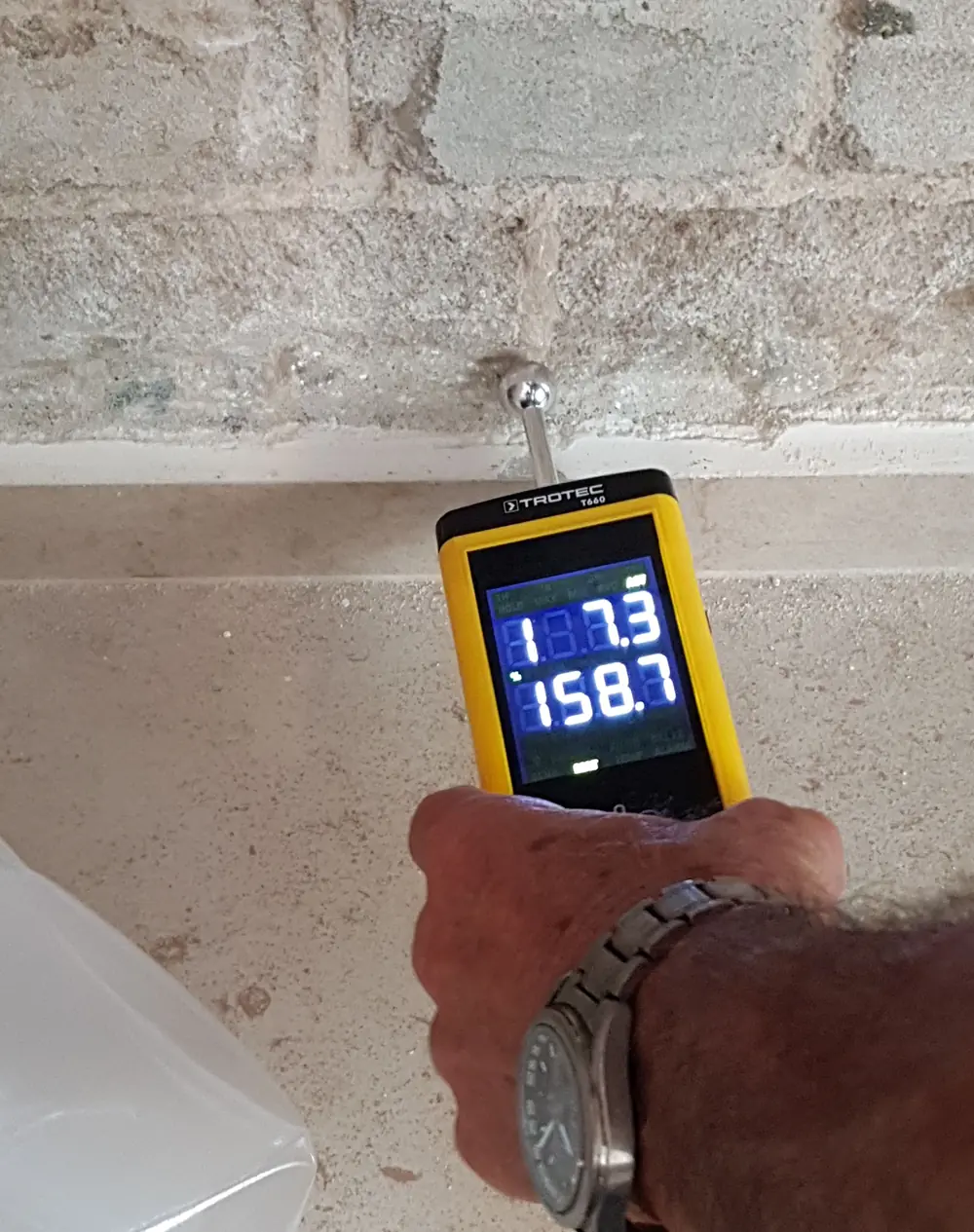
Pinless meters read moisture without breaking the surface. Acoustic tools listen for water escaping under pressure. Together, they turn a colour pattern into a finding.
Once a spot is confirmed, repair stays small. Our leak repair in Portland page explains that step.
| Method | Best for | What it shows | Key limitation | Opens anything? |
|---|---|---|---|---|
| Thermal imaging | Hot lines, radiant heat, wall patterns | Surface temperature pattern | Needs contrast; not proof alone | No |
| Acoustic | Pressurised supply leaks, slabs | Sound of escaping water | Quiet or deep leaks stay faint | No |
| Moisture meter | Confirming a suspect patch | Moisture in the material | Confirms wet, not the source | No |
| Tracer gas | Quiet, deep, or plastic lines | Gas escaping at the defect | Line must be isolated first | No |
Signs a Thermal Scan Should Be Your First Call
| What you notice | What the scan may show | How we confirm it |
|---|---|---|
| Warm patch on a floor | Warm trail along a hot line | Moisture and acoustic checks |
| Ceiling stain, no roof leak found | Damp pattern tracking along framing | Meter reading at the pattern edge |
| Musty smell or bubbling paint | Cool damp patch on one wall | Meter check, then acoustic if pressurised |
| Water bill jump, nothing visible | Warm or cool pattern near supply runs | Meter plus acoustic checks |
| Cold, damp patch low on a wall | Cool pattern spreading from one point | Meter check for active moisture |
Infrared Leak Detection Portland Homes Need in Winter — Cold Lines and Weak Contrast
In winter, thermal leak detection often needs a partner method.
Cold water lines are the hardest thermal case here.
Winter rain leaves Portland ground cold and saturated.
A cold leak may differ from that ground by almost nothing.
Recent rain also creates innocent cool patches on walls.
We can create contrast before we scan a line.
Running hot water through a suspect line helps.
So does warming the room before the visit.
Sometimes we lead with acoustic tools instead.
Honest sequencing beats forcing a weak thermal reading.
When We Add Tracer Gas: the Related Method for Quiet, Deep or Plastic Lines
Some leaks stay silent and show no temperature contrast.
Deep lines and plastic pipes can defeat sound too.
Tracer gas gives those searches another route.
We use it only after simpler checks fall short.
The method uses forming gas, an industry standard mix.
That mix is five percent hydrogen, ninety-five percent nitrogen.
Manufacturers describe it as non-toxic at that mix.
They also describe it as non-flammable at that mix.
The isolated line is drained, then filled with gas.
Hydrogen escapes through even fine defects in pipework.
It rises through soil, concrete, and flooring above.
A sensitive detector finds where the gas peaks.
That peak marks the leak location below.
See our underground leak detection in Portland page.
What Happens During a Thermal Imaging Inspection at Your Home
You see each step, and we explain findings as we go.
01
We talk through signs, bills, and recent changes.
02
We check the water meter for movement first.
03
We scan suspect rooms, wet walls, and ceilings.
04
We scan floors where heat patterns may show.
05
We mark each suspect patch for confirmation.
06
We confirm patches with the meter and other tools.
07
We explain the marked spot and next options.
Nothing opens during a scan visit at all. Timing is confirmed when you book. You receive a written report with photos and the marked spot.
Facts and Figures: Thermal Detection, Checked Honestly
Only sourced technology facts appear in this draft.
A thermal camera reads surface temperature, not water. Source: FLIR manufacturer guidance.
Evaporative cooling is a main moisture signal in walls. Source: Fluke manufacturer guidance.
A thermal camera is not a moisture meter. Source: Fluke manufacturer guidance.
Business figures: 15+ years serving Portland; 5,000+ leaks located.
FAQ
Frequently Asked Questions
Think a Hidden Leak Is Warming or Cooling One Spot?
Do not let a colour guess decide your repair. Book thermal imaging leak detection with confirmation, not guesswork. Get the pattern scanned, confirmed, and clearly marked. Then plan one targeted repair.