
Leak Repair
Leak Repair in Portland, OR
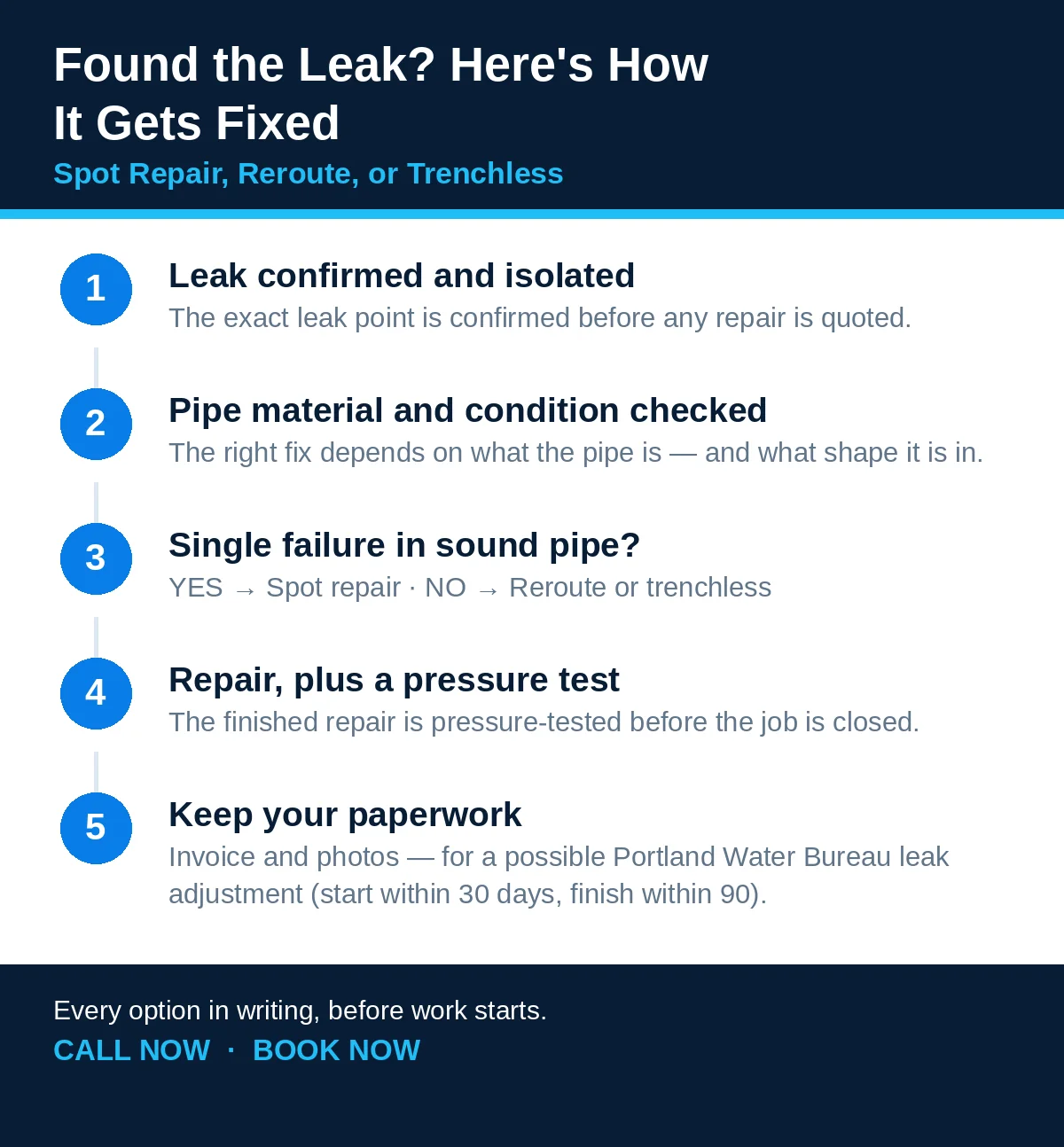
When you search for leak repair Portland homeowners can trust, the leak is already found. Water leak repair in Portland starts by confirming the exact failure point. This page explains spot repair, reroute, and trenchless options. It helps you choose the fix that fits your pipe. If your leak is not located yet, start with leak detection on our homepage.
Leak Repair in Portland: From Found Leak to Fixed Pipe
A found leak still needs the right repair decision.
01 — CONFIRM AND ISOLATE
Confirm and Isolate the Failure
The visit starts by shutting off the affected line. A pressure test confirms the failure still leaks. The marked detection point gets checked again.
02 — OPTIONS IN WRITING
Your Repair Options in Writing Before Work Starts
Before work starts, see each option in writing. Each option should name its method and scope. It should state inclusions, patching, permits, and exclusions. You receive a fixed quote before any repair starts.
03 — REPAIR, TEST, HAND BACK
Repair, Pressure Test, and Clean Hand-Back
The damaged section gets repaired or replaced. The line then holds pressure during a test. You see the result before surfaces close. You receive a written report with photos.
What Should You Do First When a Pipe Bursts?
Shut off the water first, before anything else. Use the angle stop under that fixture if possible. Use the main shutoff if the leak hides elsewhere. Move belongings away from the water.
Burst Pipe Repair: What Gets Replaced, What Gets Saved
A burst pipe repair replaces the damaged section only. Sound pipe on both sides usually stays.
Freeze, Corrosion, or Pressure — Why Portland Pipes Burst
Hard freezes stress pipes in unheated crawlspaces. Corrosion thins older galvanised walls until they split. High pressure stresses every weak joint. Water still flooding uncontrollably is different. See our emergency leak detection page for that case.
Water Line Leak Repair in Portland — Including Trenchless Options
Your private water line runs from the meter stop. Past that point, the line belongs to the homeowner. Read about underground leak detection for locating it.
Trenchless Pipe Bursting and Directional Drilling
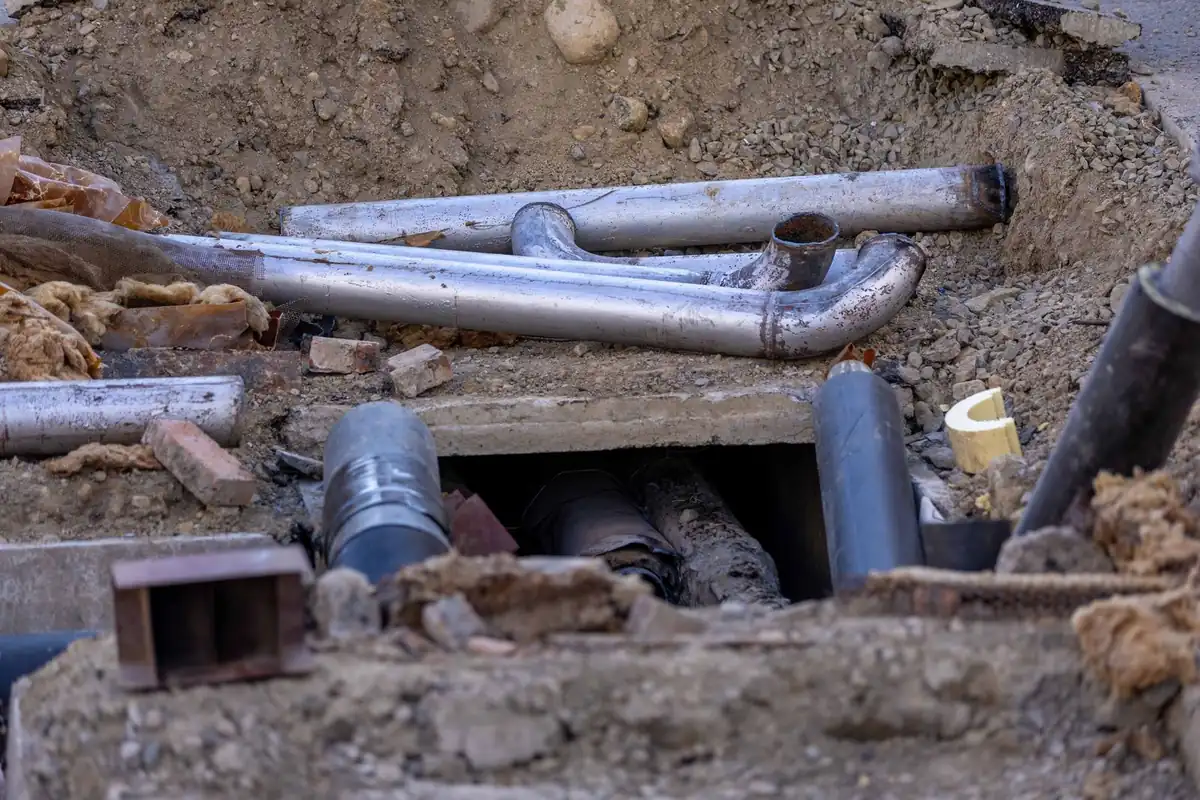
Pipe bursting pulls a new line through the old path. Directional drilling bores a new path underground. Both need access points at each end only. Yards and driveways stay mostly intact.
When Open-Trench Repair Is Still the Right Call
A collapsed line may not accept a pulled replacement. A short, shallow run may open cleanly by trench. Bad grade or sharp bends can favour trenching too.
Permits and the Right-of-Way
Work touching a City water service needs correct permits. Title 25 covers repair and replacement permit duties. Right-of-way work needs separate approval too.
Repair Method by Leak Location
Location decides how a repair reaches the pipe.
| Leak location | How we reach it | Repair options | Disruption | Watch-out |
|---|---|---|---|---|
| Under slab | Pinpoint, then one opening, or none | Spot repair / PEX reroute | Low to high | Pipe condition beyond the failure |
| In wall or ceiling | Small opening at the failure | Spot repair / section replacement | Low | Hidden moisture inside |
| Crawlspace or basement | Direct access from below | Spot repair / section replacement | Low | Easiest access here |
| Underground yard or service line | End access points, or trench | Trenchless / open-trench | Low to high | Permit and right-of-way scope |
| Sewer lateral | Cleanout access, camera first | Lining / bursting / open-trench | Low to high | Host-pipe shape decides lining |
Spot Repair vs Reroute: How the Decision Is Made
One leak in sound pipe usually suits spot repair. Repeated leaks point toward a reroute instead. Material and floor finish shape that choice.
When a Spot Repair Is the Smart Fix
Spot repair fits a failure that stands alone. Sound, newer pipe around the leak supports it. So do accessible points and first leaks.
When a Reroute Beats Opening the Slab
A reroute abandons the failed under-slab section. A new PEX line runs through attic or walls. Choose it for repeat leaks on one run. Choose it under tile or hardwood floors too. For locating first, see slab leak detection.
When the Honest Answer Is a Repipe, Not Another Repair
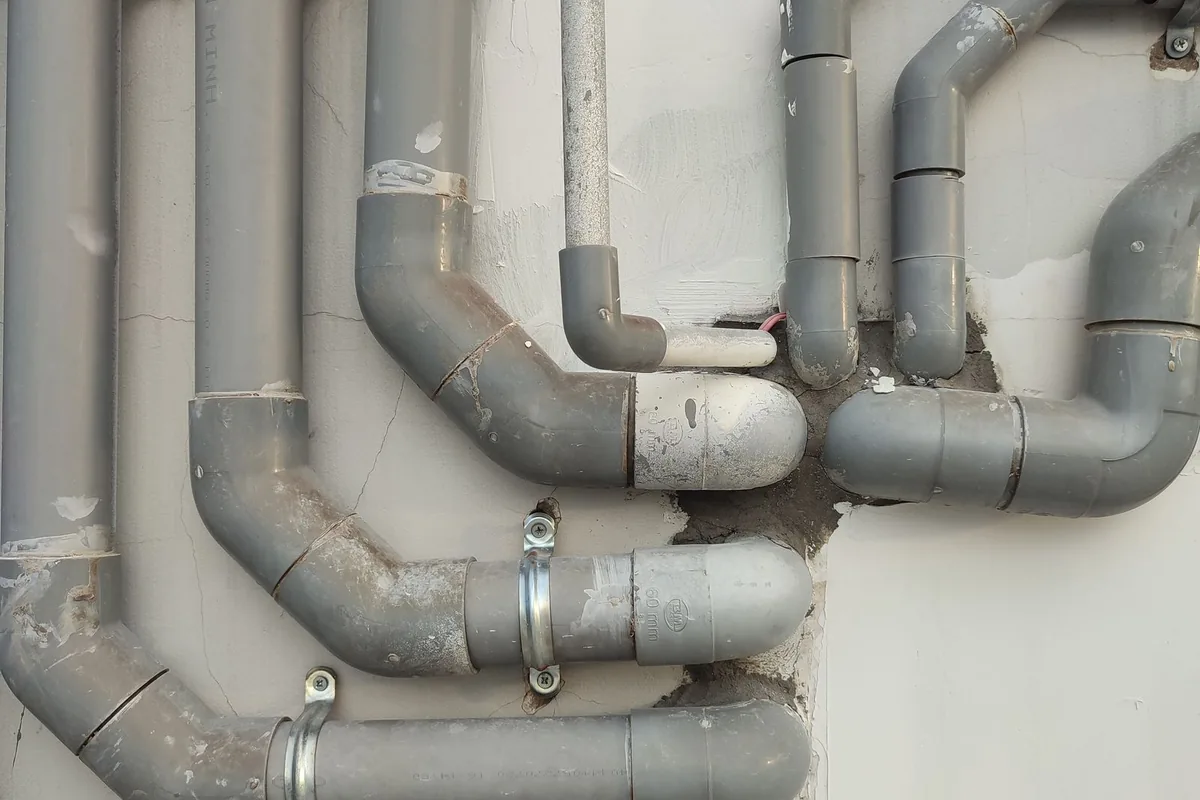
Leaks in different rooms signal a pattern. End-of-life material turns each repair into a pause. Replacing the run ends the repeated openings.
| Factor | Spot repair | Reroute |
|---|---|---|
| Best for | Single failure, sound pipe | Repeat leaks, corroded pipe, finished floors |
| Floor or wall impact | Opens finish at one point | Avoids slab; small openings |
| Old pipe | Stays in service | Failed section abandoned |
| Future leak risk | Unchanged | Removed for the rerouted run |
| Future access | Still under slab | Accessible above slab |
| Job size | Smaller | Larger |
Leak Repair for Older Portland Homes: Galvanised, Copper, and Polybutylene
Leak repair in Portland often starts in older neighbourhoods. Irvington and Laurelhurst hold many pre-1960 homes. Sellwood-Moreland, Hawthorne, and Foster-Powell mix pipe eras. Each material fails in its own pattern.
Galvanised Steel: Why One Leak Can Mean the Whole Run
Galvanised lines corrode from the inside outward. Rust narrows the flow path over decades. Pinholes appear near joints and threads first. One leak means the whole run shares that age. A spot fix does not reset that clock.
Copper Pinhole Leaks: Local Fix or Early Warning?
One pinhole at a joint can stay local. Scattered pinholes signal wider thinning. Pattern, not panic, drives the decision.
Polybutylene and Cast Iron: Repair Limits
Polybutylene served many homes built from 1978 to 1995. It turns brittle and fails suddenly. Standard guidance treats it as replace, not repair. Cast iron fails through rust and cracking.
| Material (Portland era) | How it fails | Repair implication |
|---|---|---|
| Galvanised steel (pre-1960s) | Inside-out corrosion, narrowing, joint pinholes | Spot fix buys time; assess whole run |
| Copper | Single joint pinhole, or scattered pinholes | One: repair. Pattern: plan replacement |
| PEX (modern) | Fitting or mechanical damage | Section repair usually suffices |
| Polybutylene (1978–1995) | Brittle, sudden failure | Replace, not spot repair |
| Cast iron, clay, Orangeburg (drains) | Rust, cracks, roots, deformation | Camera first; lining, bursting, or replacement |
Will the Water Company Fix a Leak?
No — past the meter, the repair is yours. The Portland Water Bureau maintains pipes to the meter stop. Portland Code 21.30.130 sets that boundary. Your service line and house plumbing sit downstream.
The One Exception: Portland’s Home Water Leak Repair Program
The City runs a Home Water Leak Repair Program. It offers free repair for income-qualified homeowners. Eligibility, from the portland.gov program page: The program covers toilets, faucets, and underground pipes. It never covers sewer repairs. It pays nothing for work done outside it. Small leaks can wait a year or longer. Apply through portland.gov, not through this business.
- Own and live in a single-family home
- Hold an active City drinking water account
- Pay the sewer, stormwater, and water bill directly
- Join the City financial assistance program first
Keep Your Repair Proof: The Leak-Adjustment Checklist
The Water Bureau may adjust a bill after documented repair. Start repair within 30 days of the high-use notice. Finish within 90 days. Keep the dated invoice, repair description, and photos. City staff may check the meter afterward. Adjustment limits apply per 12-month period. Never assume an adjustment will be granted. We hand over the invoice, repair description, and photos.
Sewer Line Repair in Portland: Repair Only After Camera Diagnosis
No sewer repair quote should start with digging. A camera must show the damage first. Start with sewer camera inspection before choosing any repair. Our team performs sewer repairs after diagnosis.
Trenchless Sewer Options: Pipe Bursting and CIPP Lining
Pipe bursting suits laterals that failed or deformed. Orangeburg laterals in Lents often fit bursting. CIPP lining needs a host pipe holding its shape.
Open-Trench Sewer Repair and Portland Permits
Some laterals need open-trench section replacement instead. A plumbing permit covers house to property line work. A right-of-way permit covers line to curb work. Portland’s sewer guide at portland.gov explains both.
How Much Does Water Leak Repair in Portland Cost?
How much does it typically cost to fix a leak? What is the average cost of repairing a leak? Both depend on the same factors. No honest price exists before diagnosis confirms access. That is why leak repair Portland quotes differ so widely.
What Moves a Repair Quote Up or Down
Spot repairs run $250–$900 (typical $550). Reroutes run $1,800–$4,500 (typical $2,700).
- Access: open crawlspace work beats under-slab work
- Location: slab, wall, yard, and sewer depths differ
- Material: galvanised and polybutylene change the scope
- Method: spot repair, reroute, trenchless, or open-trench
- Restoration: floor, concrete, and yard finishes add cost
- Permits: service-line and sewer scope can add fees
Repair Now or Replace the Run: The Long-Run Cost Logic
Repeated spot repairs add up across years. Each opening also risks new surface damage. One reroute can end leaks on that run.
Facts and Figures
The City leak repair program has operated since 1998. Portland Water Bureau pages state that history. That figure belongs to the City, not this business.
Years in business: 15+
Leaks located to date: 5,000+
Repair terms: fixed quote approved before any repair starts
Service area list: Portland plus ten metro communities (full list on the homepage).
15+Years in Business
5,000+Leaks Located to Date
FixedQuote Before Work Starts
FAQ
Frequently Asked Questions
Ready to Fix the Leak You Found?
Tell us where the leak sits and what pipe you have. We will talk through spot repair, reroute, or trenchless paths. Ready for leak repair in Portland that fixes the cause?