
Leak Detection in West Linn
Leak Detection in West Linn, OR
Pinpoint the leak before the slope spreads the damage.
A hidden leak rarely stays small on a West Linn hillside lot. Leak detection in West Linn starts with testing, never with digging. Our West Linn leak detection work follows the water from meter to marked spot. Steep yards, tall firs, and ageing pipes hide leaks well here. You finish with one marked location and written findings.
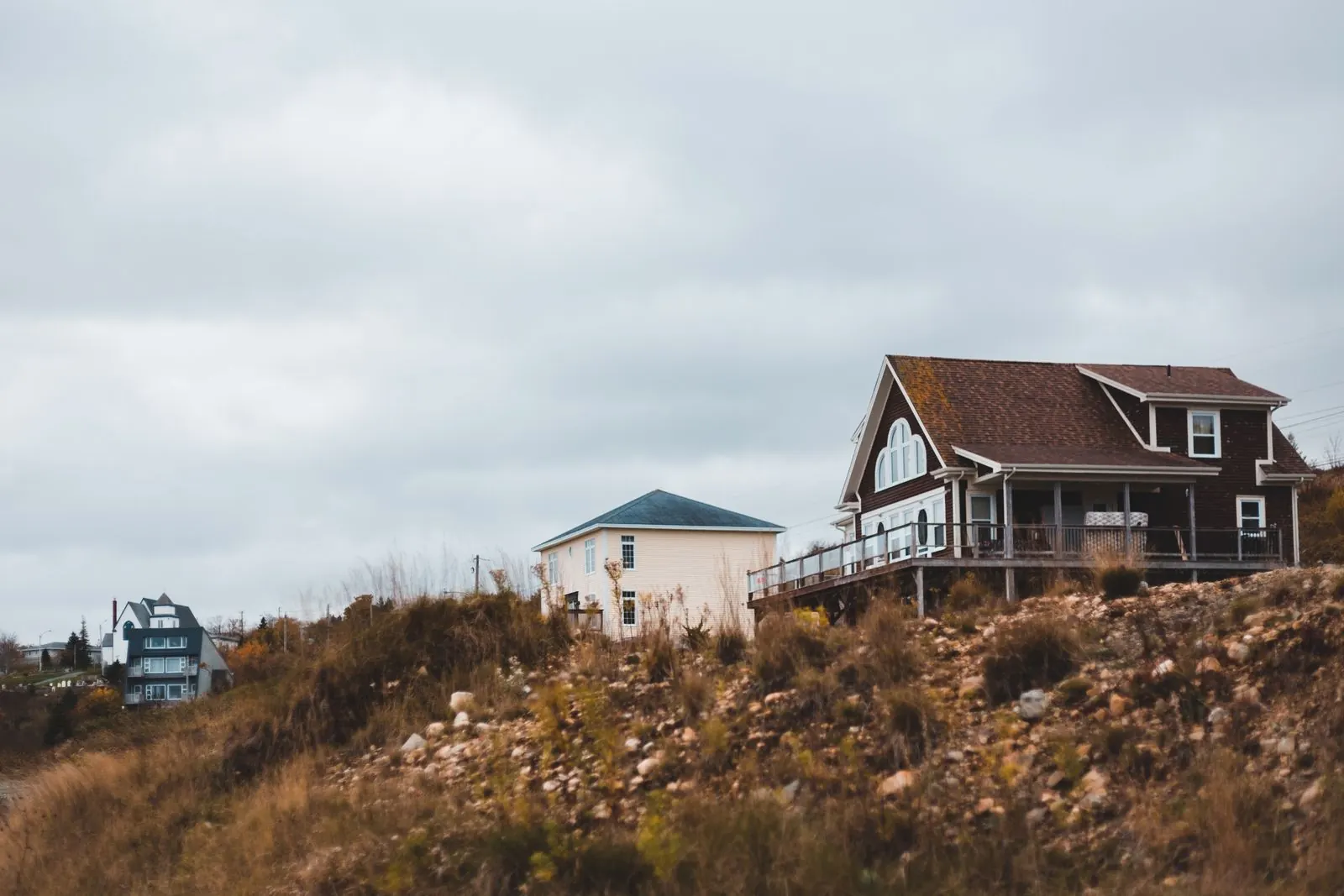
Non-invasive testing first
Sloped-lot and yard-line tracing
One marked leak location
Written findings for next steps
Signs You Need Leak Detection in West Linn
No single sign proves a leak on its own. Two signs together justify proper testing. Slopes change how leak signs show up here. The wet spot can sit far from the actual break. Escaping water often surfaces downhill from it. That gap is why professional leak detection in West Linn matters.
Your Habits Stay Flat but the Bill Climbs
Your usage pattern did not change this quarter. The bill still rose. Continuous hidden loss explains that pattern best.
Soggy Ground Partway Down the Slope
One strip of lawn stays soft after dry days. It often sits below the leaking line, not above it. Gravity moves the evidence downhill. You may also hear faint running water at night.
| What you spot | What it likely means | What to do next |
|---|---|---|
| Bill rises, habits unchanged | Continuous hidden water loss | Run the meter test |
| Soggy strip below a slope line | Service line leaking uphill | Note the strip, then test |
| Meter moves, all fixtures off | Active leak somewhere on your side | Arrange isolation testing |
| Damp crawlspace or lower room | Line or fitting leaking below grade | Arrange a detection visit |
| Pressure drops on upper floors | Supply-side loss or failing line | Arrange pressure testing |
| One bright-green patch in dry weather | Water feeding soil from below | Photograph it, then test |
Signs suggest. Testing decides what they actually mean.
How Can You Find Out Where a Leak Is Coming From in West Linn?
Start with your water meter, like the City of West Linn advises. The City’s own Water Leaks page walks residents through the same first check. Stop all water use inside and outside. Read the meter and write the reading down. Wait two hours without using any water. Read the meter again afterwards. Movement means water escaped somewhere while everything sat still.

A moving meter confirms loss, not location.
Split the search before anyone digs.
Shut the house valve and recheck the meter.
Still moving points to the buried meter-to-house line.
Stopped points to a leak inside the home.
Rule out the most common look-alike first.
Put food colouring in your toilet tank.
Wait ten minutes without flushing.
Colour in the bowl points to a worn flapper.
If water pools anywhere, close your main valve first.
If you hear loud flowing water, close it too.
Why West Linn Homes Hide Leaks So Well
West Linn stacks three leak-hiding factors together. Sloped ground moves water away from breaks. Mature trees crowd buried lines with roots.
Older Bolton and Old Town Pipes
Bolton and Old Town hold many of the city’s oldest homes. Their supply lines often date back decades. Galvanised steel corrodes from the inside out. Pinhole leaks start small and stay hidden longest here.
Steep Lots and Long Service Lines
Many West Linn lots drop away from the street. The meter sits up top, near the road. The service line then runs long and downhill. Escaping water follows the slope, not the pipe.
Newer Rosemont-Area Builds
Rosemont-area homes are far newer builds. They usually run PEX lines and slab-on-grade sections. Fittings fail more often than pipe walls. Irrigation lines add another hidden network there.
Mature Trees on River Slopes
Tall firs and maples shade most West Linn streets. Their roots seek moisture around buried joints. Roots widen small cracks season after season.
Leak Detection in West Linn, OR: How the Leak Gets Pinpointed
Good leak detection separates finding from fixing. We offer both services, quoted as separate steps. Two methods must agree before we paint the mark.

Our five steps narrow the search zone by zone:
1. Confirm — We review your signs, bill change, and meter reading. 2. Split — Shutoff valves divide house lines from yard lines. Pressure testing shows which side loses water. 3. Trace and listen — We trace the buried line’s route first. Ground microphones then follow the escape sound. 4. Back it up — Thermal imaging or tracer gas checks the strongest point. One method alone never earns the mark. 5. Mark and report — We mark the exact spot on the surface. You keep written findings with photos.
Acoustic Listening on Sloped Ground
Pressurised water makes a distinct sound while escaping. Sensitive microphones pick that sound up through soil. Correlators compare timing between two sensors on long runs.
Thermal Imaging and Tracer Gas
A thermal camera shows temperature patterns on floors. Quiet leaks and plastic lines can defeat listening. Tracer gas then finds the escape point instead.
| Method | Best for | Opens ground or floors? | Main limit |
|---|---|---|---|
| Meter and pressure testing | Confirming loss and its side | No | Narrows the zone, not the spot |
| Line tracing | Finding where buried lines run | No | Route must carry a signal |
| Acoustic listening | Pressurised leaks in soil or slabs | No | Drainage noise masks quiet leaks |
| Thermal imaging | Warm pipe runs, damp patches | No | Poor on cold lines |
| Tracer gas | Faint leaks in plastic lines | No | Line gets charged first |
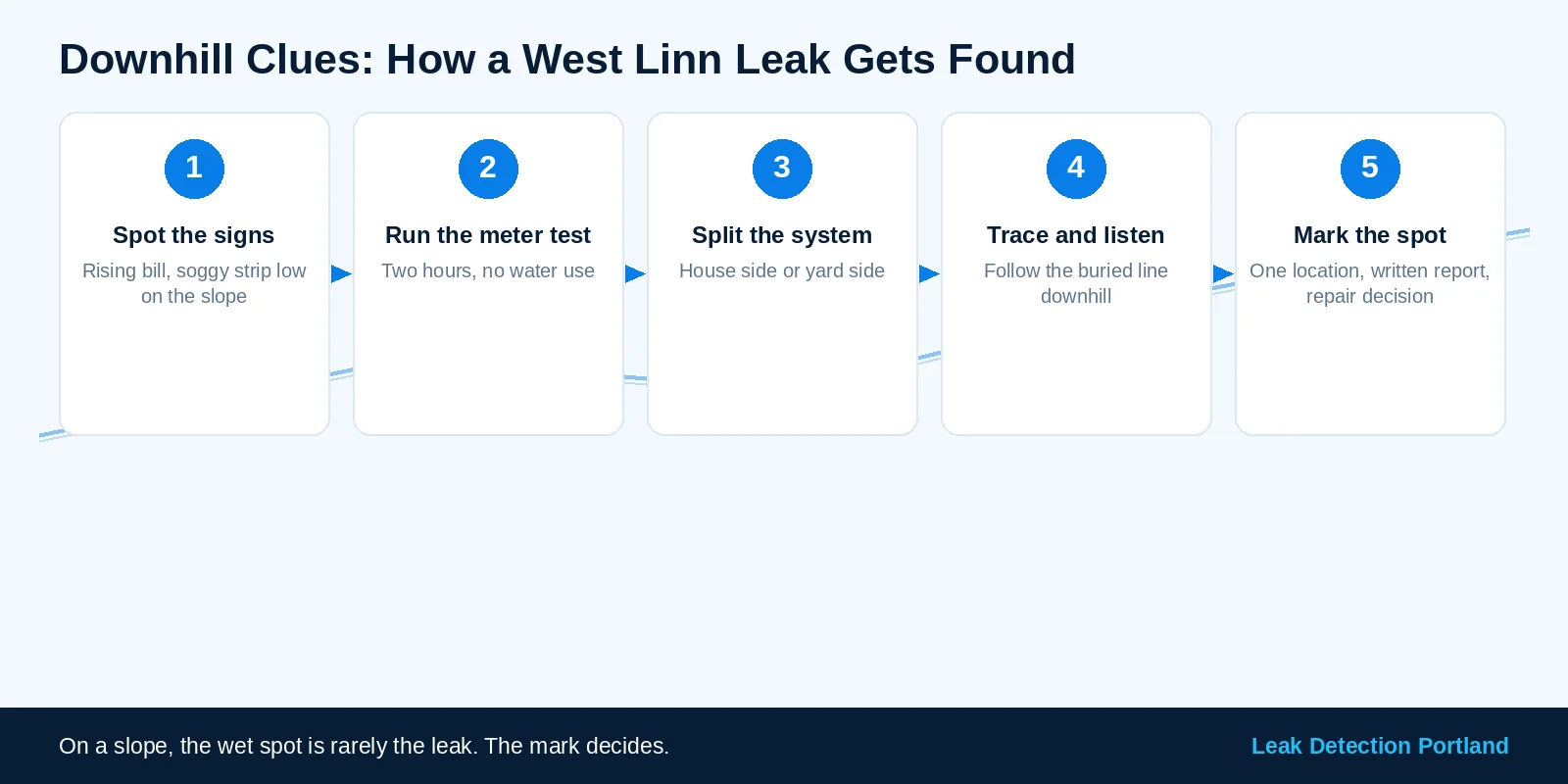
Two agreeing methods earn the surface mark. Disagreement earns more testing, not a guess.
Is There an App to Find Water Leaks?
Not by itself, no.
An app cannot hear water through soil or concrete.
Apps only display data from hardware you install.
Smart shutoff monitors watch flow at the main line.
They flag unusual flow and can close the valve.
They cannot mark the buried spot, though.
Pinpointing still takes acoustic and pressure work on site.
Treat any app alert as your cue to test.
Leak Services West Linn Homes Commonly Need
Some West Linn leaks belong to one specialist page each. Under-slab lines belong on our slab leak detection page.
Buried yard lines belong on our underground leak detection page. Drain and sewer questions start with a sewer camera inspection.
Hot-line patterns suit thermal imaging leak detection. Water pouring through a ceiling needs our emergency leak detection page.
Pool and spa loss sits on our pool leak detection page. Marked leaks move to our leak repair page. Start from general leak detection in Portland, Oregon or browse all service areas.
West Linn Leak Facts and Figures
EPA WaterSense tracks household leak waste across the country.
Average homes waste over 9,300 gallons yearly.
Nationwide, home leaks approach one trillion gallons yearly.
Fixing the easy leaks saves about ten percent overall.
The City of West Linn publishes its own leak guidance for residents.
Our crew has found 5,000+ leaks over 15+ years.
Leak Detection West Linn FAQs
Nearby coverage continues in Lake Oswego, Oregon City, and Tualatin. Water moving too fast to wait belongs on our emergency leak detection page.
Book Leak Detection in West Linn Today
Pinpoint the leak before the slope spreads the damage.