
Leak Detection in Tualatin
Leak Detection in Tualatin, OR
Wet ground hides leaks here longer than almost anywhere nearby.
Leak detection in Tualatin starts with the ground itself. Low lots near the river stay saturated for much of the year. Our Tualatin leak detection work focuses on crawlspace supply runs, ageing subdivision pipes, and buried service lines. Escaping water blends into already-wet soil here. We pinpoint the loss and mark one exact spot.

Flat fee confirmed before we start
Non-invasive acoustic and thermal checks
One marked spot, not a search area
Written report with photos
Signs of a Hidden Leak in a Tualatin Home
Tualatin leaks rarely announce themselves on the surface. Saturated soil swallows the usual outdoor evidence. The indoor and billing signs below carry more weight here.
A Bill That Climbs While the Yard Looks Normal
Your usage habits stay steady across two billing cycles. The total still climbs without any visible cause. A buried line leak fits that pattern closely. Local news here has covered a line leak that ran long before discovery. Long, quiet losses are a known Tualatin story.
Moisture and Musty Air Under the House
Crawlspace leaks drip onto soil that already feels damp. The difference shows in smell before it shows in puddles. Musty air at floor vents often arrives first. Flooring above the run may soften or cup slowly.
One Patch That Never Dries Between Rains
Most of the yard dries during a short dry spell. One strip above the service line stays dark and soft. Escaping water keeps that single patch fed. Compare patches after two dry days, not after rain.
| Sign you notice | What it often points to | Next step |
|---|---|---|
| Bill climbs, yard looks normal | Buried service line losing water quietly | Run the meter test below |
| Musty air at floor vents | Crawlspace supply drip below the floor | Check the meter, then call |
| One yard patch never dries | Leak feeding soil above the line | Book leak detection in Tualatin |
| Meter dial moves, all taps off | Confirmed water loss, place unknown | Arrange isolation testing |
| Soft or cupping flooring | Long moisture exposure from below | Treat the search as urgent |
How Can I Find Out Where a Leak Is Coming From?
Start at the water meter on a dry day.
Stop all water use inside and outside first.
Read the meter and watch the small leak indicator.
Movement means water leaves the system somewhere.
Close the irrigation supply next, if your home has one.
Recheck after twenty quiet minutes.
Movement now points to house plumbing or its service line.
Remove the cheap look-alike from the list early.
Drop food colouring into each toilet tank.
Wait ten minutes without flushing.
Colour in the bowl clears pipes and blames a flapper.
Then look inside the crawlspace hatch with a flashlight.
Dripping joints or fresh wet soil narrow the map.
Write down what you saw and where.
A meter test proves loss, never location.
Pinpointing takes listening equipment at the house.
See Appendix B.*
Wet Ground, Crawlspaces, and 1970s–90s Plumbing
Three local patterns shape most Tualatin searches. The river sets the soil conditions first. Housing era sets the pipe materials second. Foundation style decides where leaks hide third.
Riverfront Soil and a High Water Table
Homes near the Tualatin River sit on low, fine soil. Winter rain keeps that ground saturated for months. A leaking line adds water nobody can see. Sound-based testing matters more than surface clues here. Pressure isolation splits the system before anyone digs.
Crawlspace Runs Under Most Subdivisions
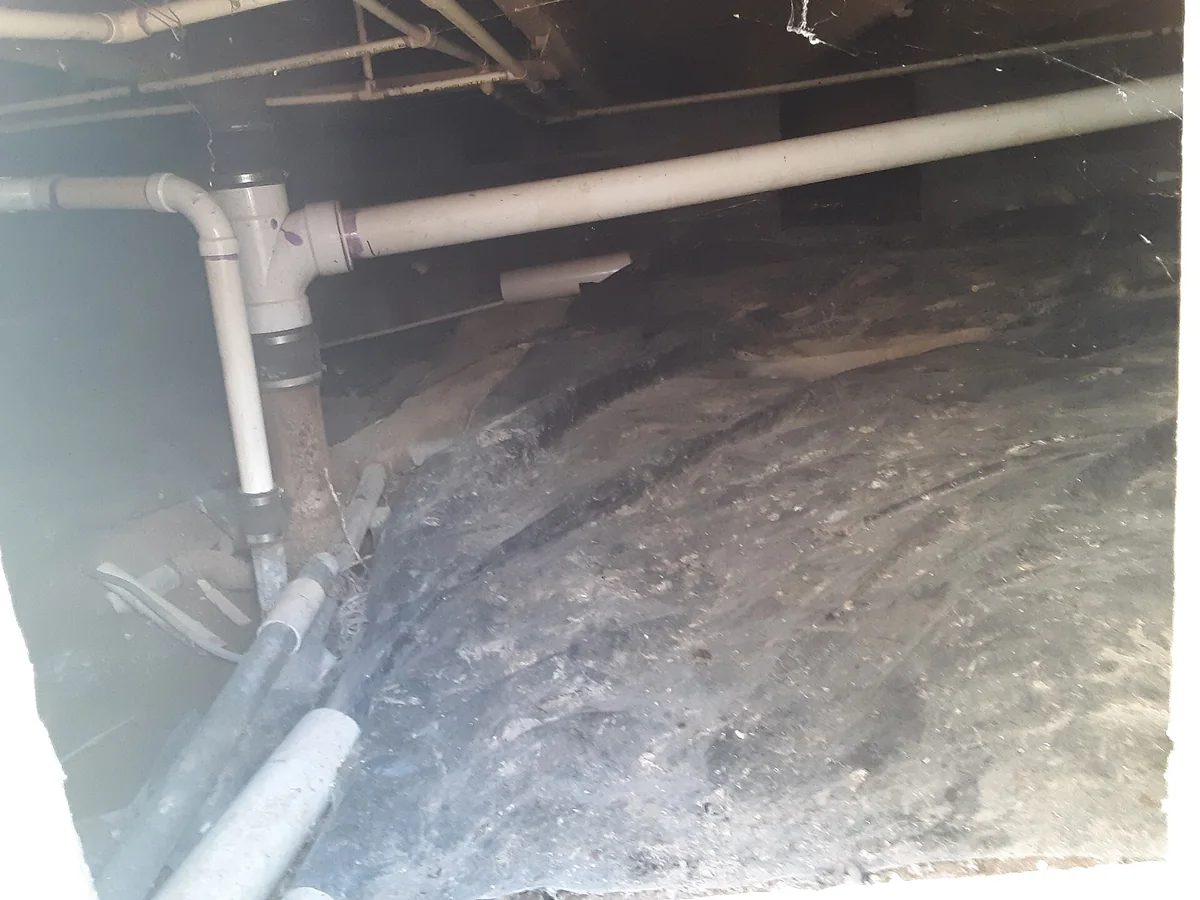
Most 1970s–90s subdivisions here sit over crawlspaces. Supply lines run exposed beneath the floor framing. A pinhole sprays into dark, quiet space below. Homeowners hear nothing and see nothing for months. The first evidence is usually smell, flooring change, or the bill.
Subdivision-Era Pipe Materials

Builds from that era often used polybutylene or early CPVC. Polybutylene earned a poor record for sudden failures. Fittings and joints age out across whole streets together. Neighbours sometimes discover similar leaks within a few seasons. Material alone never proves a leak, though. Testing still decides every single case.
How We Pinpoint a Leak in Tualatin
We follow the same five steps on every Tualatin visit. Two methods must agree before any spot gets marked.
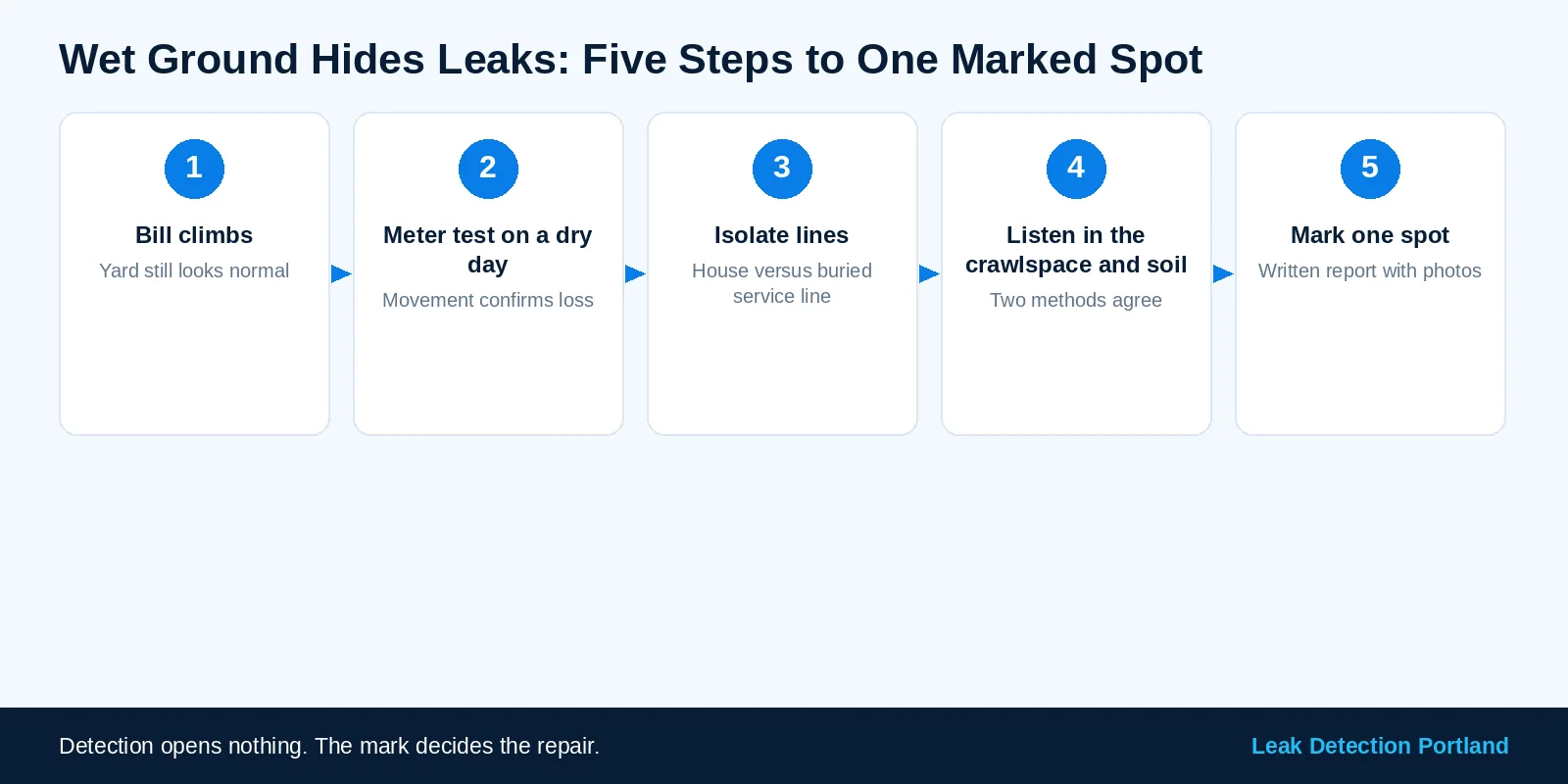
1. Confirm — We review your bill pattern and walk the crawlspace access. We repeat the meter test on site. 2. Isolate — We pressure-test house lines and service line separately. 3. Listen — Ground microphones follow escape sound through soil and framing. 4. Confirm again — Moisture readings or thermal patterns back the acoustic peak. 5. Mark and report — One spot gets marked, with everything documented in photos.
| Method | Best for in Tualatin homes | Opens anything? |
|---|---|---|
| Pressure isolation testing | Splitting house lines from the buried service line | No |
| Acoustic listening | Pressurised leaks under soil or crawlspaces | No |
| Moisture meter checks | Confirming crawlspace and floor moisture | No |
| Thermal imaging | Hot-line trails across finished floors | No |
Tualatin Leak Services: Find It First, Then Fix It
Every call starts with detection, whatever the leak type. Lines beneath a floor slab follow our slab leak detection process.
Yard lines buried underground belong with underground leak detection. Sewer questions start with a sewer camera inspection.
Hot-line patterns suit thermal imaging leak detection. Pool and spa losses follow the pool leak detection route instead.
Active flooding needs the emergency leak detection steps first. After marking, leak repair gets a separate written quote.
Our wider leak detection in Portland, Oregon team covers the full metro area. All cities appear on our service areas page.
Leak Detection Facts for Tualatin Homeowners
Per EPA WaterSense, household leaks waste serious water nationally.
The average home’s leaks waste over 9,300 gallons yearly.
Across all homes, leaks approach one trillion gallons yearly.
Correcting the easy leaks can save about ten percent of that.
A slow line leak here can hide inside those averages for months.
Our team carries 15+ years of experience, with 5,000+ leaks located.
You receive a written report and photos for every job.
A flat fee is confirmed before any work starts.
Keep your report and invoice for any utility bill review.
Tualatin Leak Detection FAQs
Book leak detection in Tualatin as soon as the signs agree. Neighbours in Tigard, Lake Oswego, and West Linn get the same process.
Leak Detection in Tualatin
Tell us what you have noticed, and we will match the right detection methods to your home.